.png)
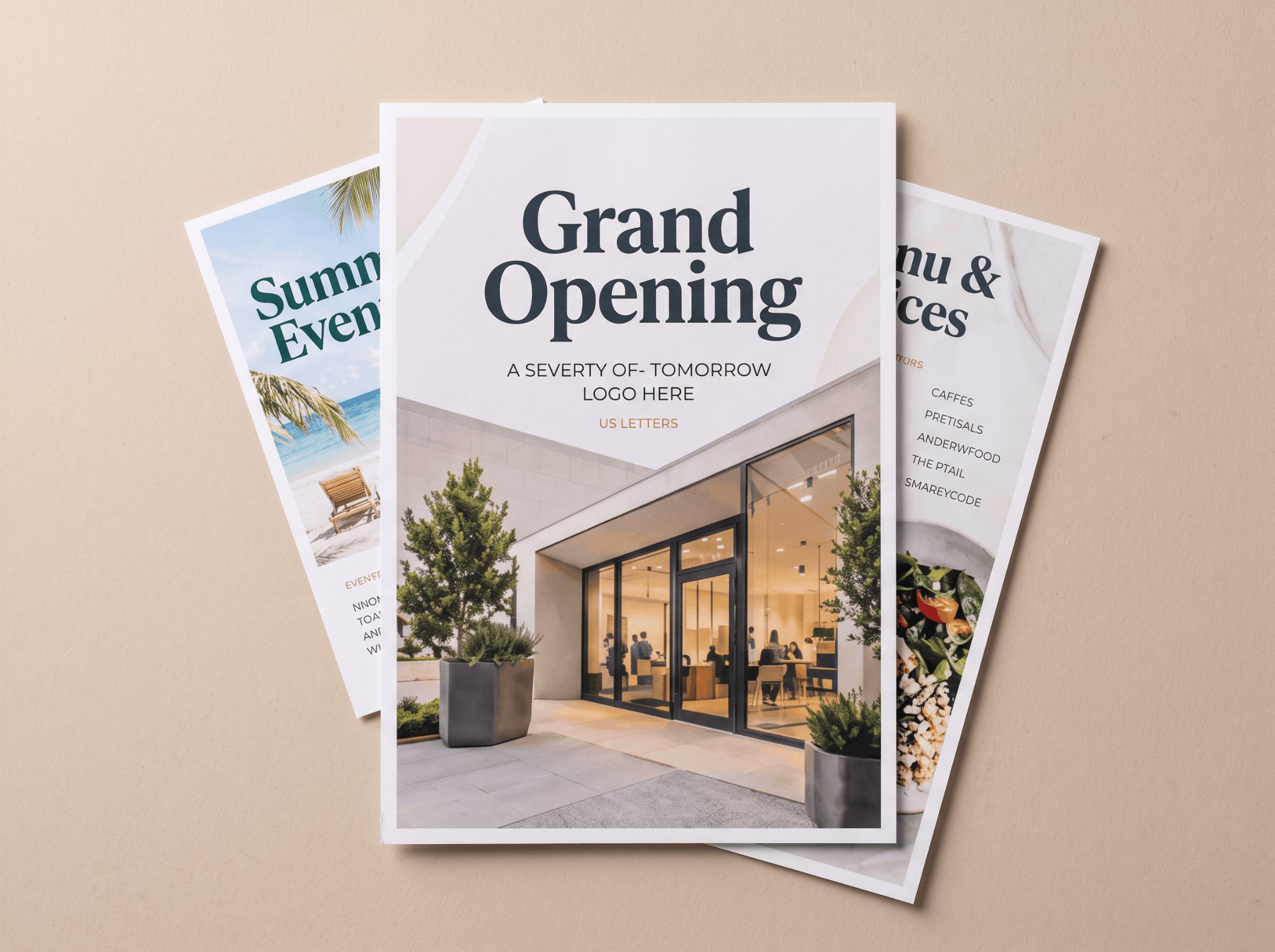
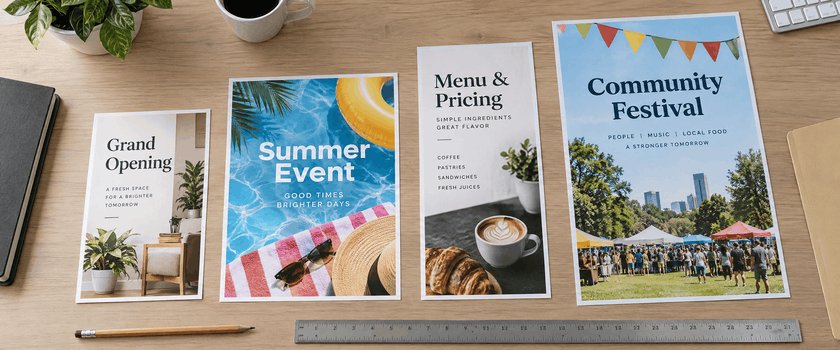
The standard flyer size for most marketing campaigns is 8.5 x 11 inches, the same as U.S. letter paper. It is familiar, affordable in volume, and fits most displays and folders without trimming. Still, the best standard flyer size depends on where the flyer will go, how many people need to see it, and how much content must fit. Size changes cost per piece and decides which distribution methods are practical, which is why business flyer printing services usually start the conversation with size.
Flyer printing falls into a few recognized sizes. Each suits a different job, and no single one is correct for every campaign.
Most U.S. printers treat 8.5 x 11 as the default unless a project needs more or less room. Many businesses pair flyers with brochures, using the flyer for the broad announcement and the brochure for the deeper pitch to qualified prospects.
How a flyer reaches its audience should shape the size as much as the content does.
Flyers handed out at a register or left at homes pair well with door hangers, which give residential campaigns a second, more durable touchpoint. Choosing the channel first avoids a batch of flyers that does not fit how you plan to use them.
A full sheet gives more room for content, while a half sheet costs less per piece at scale. These two sizes cover most flyer orders.
Neither size is better by default. The deciding question is whether the flyer must be read from a distance or held in someone's hand.
Size is not the only variable. Paper stock and color choices change both cost and durability at every size.
Short and mid-size runs suit digital printing, which allows quick turnaround for time-sensitive promotions and easy updates between runs.
Every size has its own file requirements, and errors here are a leading cause of reprints.
A graphic design team familiar with these specs can make sure a layout built for one size translates cleanly if the campaign later shifts to another format.
Size and quantity are closely linked, since per-piece cost changes with both.
Mailed campaigns should coordinate flyer size with direct mail services to confirm postage and envelope fit before printing. Treating size and quantity as one planning decision usually produces a more accurate budget.
Choosing the right size is the first real decision in any flyer campaign, and it shapes cost, distribution, and results. Copies America prints flyers in half-sheet, letter, legal, and tabloid sizes, with full color or black and white options and fast turnaround for time-sensitive promotions. Share your audience, quantity, and timeline, and Copies America will recommend the size, stock, and quantity that fit your budget. Contact Us to request a quote.
The standard flyer size for most marketing campaigns is 8.5 x 11 inches, the same as a U.S. letter sheet. It is widely recognized, fits standard displays and folders without trimming, and stays the default choice unless a campaign calls for a smaller or larger format.
A half-sheet flyer at 5.5 x 8.5 inches is generally the best size for in-person handouts. It is compact, easy to pocket, and costs less per piece because two prints come from one full sheet. It works especially well for door-to-door distribution and event tabling.
Yes, flyers can be mailed, either folded inside an envelope or as a self-mailer. Size and weight determine the USPS postage class, so a half-sheet usually costs less to send than a full sheet. Confirm dimensions with your mailing provider before printing to avoid unexpected postage costs.
A full-sheet 8.5 x 11 or tabloid 11 x 17 flyer works best for bulletin boards and storefront windows. Both are designed to be read from a short distance rather than held in hand, and the larger 11 x 17 size makes the strongest visual impact in high-traffic locations.
Flyer files need a 0.125 inch bleed on all sides, with text and logos kept at least 0.125 inch inside the trim edge. Submit files at 300 DPI in CMYK for full color or grayscale for black and white, and outline all fonts before sending them to production.
.png)
Business marketing materials strengthen your brand by giving customers consistent, physical touchpoints that build recognition and trust. Cards, brochures, folders, and mailers reach prospects where digital ads cannot, and they stay on desks long after a click is forgotten. For U.S. businesses competing on trust, that consistency often decides who gets the next call, and professional brand identity printing keeps every piece working together. This guide covers business marketing materials that matter, how they extend reach, and how to plan them with a print partner.
Most companies need a core set of business marketing materials: business cards, brochures, presentation folders, and direct mail pieces. The right mix depends on how you sell, who you sell to, and how long your typical sales cycle runs.
A retailer with foot traffic leans on postcards and flyers, while a B2B services firm usually needs stronger sales collateral. Even a small team benefits from a focused starter set, and business cards are usually the first order for small business owners. Marketing materials for small business budgets should start with the pieces customers will actually hold.
Customers form impressions through repetition. Brand consistency across print materials means using the same logo, colors, fonts, and tone on every piece. People tend to trust what looks familiar.
A structured brand system turns printing into a repeatable process instead of a series of one-off jobs, which protects recognition as your catalog grows. It also gives new hires and outside vendors clear rules, so flyers produced next spring still match the brochure printed this year.
Digital channels are crowded. Print marketing collateral reaches decision makers who may never see your ad. A physical piece can be passed between colleagues, pinned to a board, or filed for later.
Detailed brochures work well when prospects need to compare features, pricing tiers, or service areas before calling. Customer outreach print materials also pair well with email follow-ups, since each channel reinforces the other and gives prospects more than one way to respond. Add a QR code or short URL so you can measure which pieces drive inquiries.
Design signals professionalism before anyone reads a word. Buyers often judge quality in seconds, so layout, type, and imagery need to work together.
Professional graphic design support helps custom branded marketing collateral look polished and stay on message, especially when several pieces launch together. Designers also prepare files correctly for print, including bleed, resolution, and color settings, which prevents costly corrections at proof stage.
Proposals and pitches leave a stronger impression when business marketing materials feel organized. A prospect who receives a neat, branded package is more likely to share it with colleagues and revisit it before deciding.
Custom presentation folders give your team one branded package to hand over, which is useful in promotional printing for businesses that sell to committees. Standard sizes hold letter-sized pages, and finishes such as gloss or matte can match the tone of your brand.
Smart planning keeps costs predictable. Most overspending comes from rushed reorders, outdated inventory, and files that need repair at the last minute.
Short and mid-size quantities suit digital printing, which allows quick turnaround and updated versions between runs. Professional business printing services can also advise on paper weight and finish so each piece feels right in the hand. Build in extra time for shipping if you need pieces at several offices or event locations.
A strong set of business marketing materials works best when one partner handles design, printing, and delivery. Copies America has supported U.S. businesses for over 40 years with printing services built around consistency and clear timelines. Tell us what you sell and who you want to reach, and Copies America will recommend the right materials, quantities, and finishes for your budget. Whether you need a first set of business cards or a full branded toolkit, our team will guide you from proof to delivery. Contact Us to request a quote.
Business marketing materials are printed or digital items that promote a company and communicate its brand. Common examples include business cards, brochures, flyers, presentation folders, and postcards. They introduce your offer to prospects, support sales conversations, and keep your business visible between meetings.
Business cards, brochures, and postcards are the best starting materials for most small businesses. They are affordable, easy to distribute, and cover introductions, service details, and local outreach. Add presentation folders or stationery once you begin sending proposals or working with larger clients.
Marketing materials strengthen a brand by repeating the same logo, colors, and message across every customer touchpoint. Consistency builds recognition and trust, making your company feel established. Quality paper and clean design also signal reliability, which influences how prospects judge your products and services.
Yes, print marketing remains effective because it gives customers something tangible to keep and revisit. Printed pieces avoid inbox clutter and often reach decision makers directly. Pairing print with email or social media usually improves recall and response compared with relying on one channel alone.
Choose marketing materials based on your audience and sales process. Cards suit introductions, brochures suit detailed offers, folders suit proposals, and mailers suit outreach. A professional printer can recommend formats, paper stocks, and quantities that match your budget and goals.
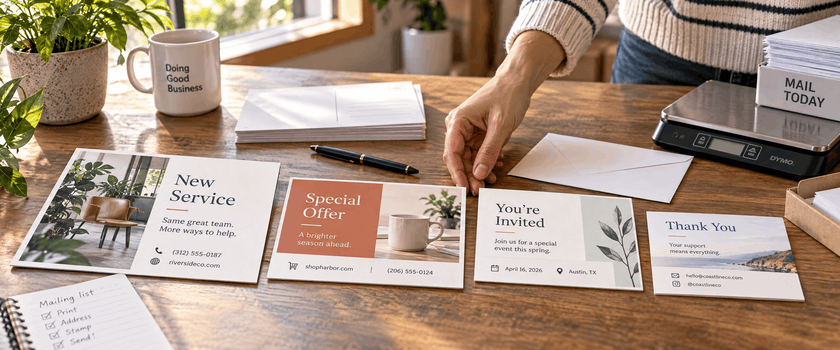
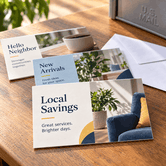
The standard postcard size for mailing is 4 x 6 inches, the largest format that still qualifies for USPS postcard pricing. Many U.S. businesses go larger, choosing 5 x 7, 6 x 9, or 6 x 11 inches to stand out in the mailbox. Knowing the standard postcard size for mailing before artwork begins keeps postage, layout, and response rates under control. This guide covers common formats, USPS considerations, and production choices, so your postcard printing and mailing order goes smoothly.
Most business mailings use one of four formats. Each suits a different goal, budget, and level of detail.
You can compare these formats and stocks in our postcards range. The standard postcard size for mailing keeps costs lowest, while larger formats earn their extra postage when the offer needs more room.
Cards up to roughly 4.25 x 6 inches generally receive postcard pricing, while larger pieces are typically priced as letters or flats. Thickness matters as well.
These rules are why the standard postcard size for mailing is the safest starting point for first-time campaigns. Our team handles these checks as part of direct mail services, so your format is verified before printing begins.
Size should follow purpose, not habit.
For neighborhood-level reach without a named list, Every Door Direct Mail targets carrier routes. Its size requirements differ from addressed mail, so confirm them before design. If you are unsure which size to use, test two formats against the same list and compare response before committing to a large run.
A smaller card demands sharper messaging. Limit each side to one headline, one offer, and one call to action.
Professional graphic design support helps you fit a clear message and a QR code without crowding the layout.
Mail handling is rough on paper, so stock choice protects your investment.
For larger quantities, offset printing delivers consistent color and a lower cost per piece, while digital suits shorter runs and personalization.
Even a perfectly sized card underperforms when it reaches the wrong households.
Well-maintained data through mailing list management keeps your postage spent on likely buyers. Time your mail drop so cards arrive before your promotion starts, and allow for production and mail-handling time.
Choosing the standard postcard size for mailing or a larger format is easier with a partner who prints and mails every day. Copies America has served U.S. businesses for over 40 years, handling design, printing, and mailing under one roof. Share your quantity, audience, and timeline, and Copies America will recommend a format that fits your postage budget. Contact Us today to request a quote and get your postcards in the mail on schedule.
The standard postcard size for mailing is 4 x 6 inches. It is the largest size that qualifies for USPS postcard pricing, which makes it the most economical option. Larger formats such as 5 x 7, 6 x 9, and 6 x 11 inches are popular but usually mail at letter rates.
The 6 x 9 inch postcard is among the most popular sizes for direct mail marketing. It offers enough room for a strong headline, offer, and call to action while remaining easy to handle. Many businesses choose it for promotions, event invitations, and new customer campaigns.
A mailing postcard should be thick enough to run through USPS sorting equipment without bending or jamming, typically printed on 14 pt to 16 pt cardstock. USPS sets minimum thickness rules, so lighter stock risks rejection or surcharges. Confirm current requirements with your printer before approving a proof.
Yes, postcard size directly changes postage cost. Cards within USPS postcard dimensions qualify for the lowest rate, while larger sizes are priced as letters or flats. Presort discounts and mailing class also affect the final price, so compare size options before finalizing your design.
A mailing postcard needs 0.125 inch of bleed on every side. Bleed extends your background color or image past the trim line so no white edges appear after cutting. Keep important text and logos at least 0.25 inch inside the trim edge.
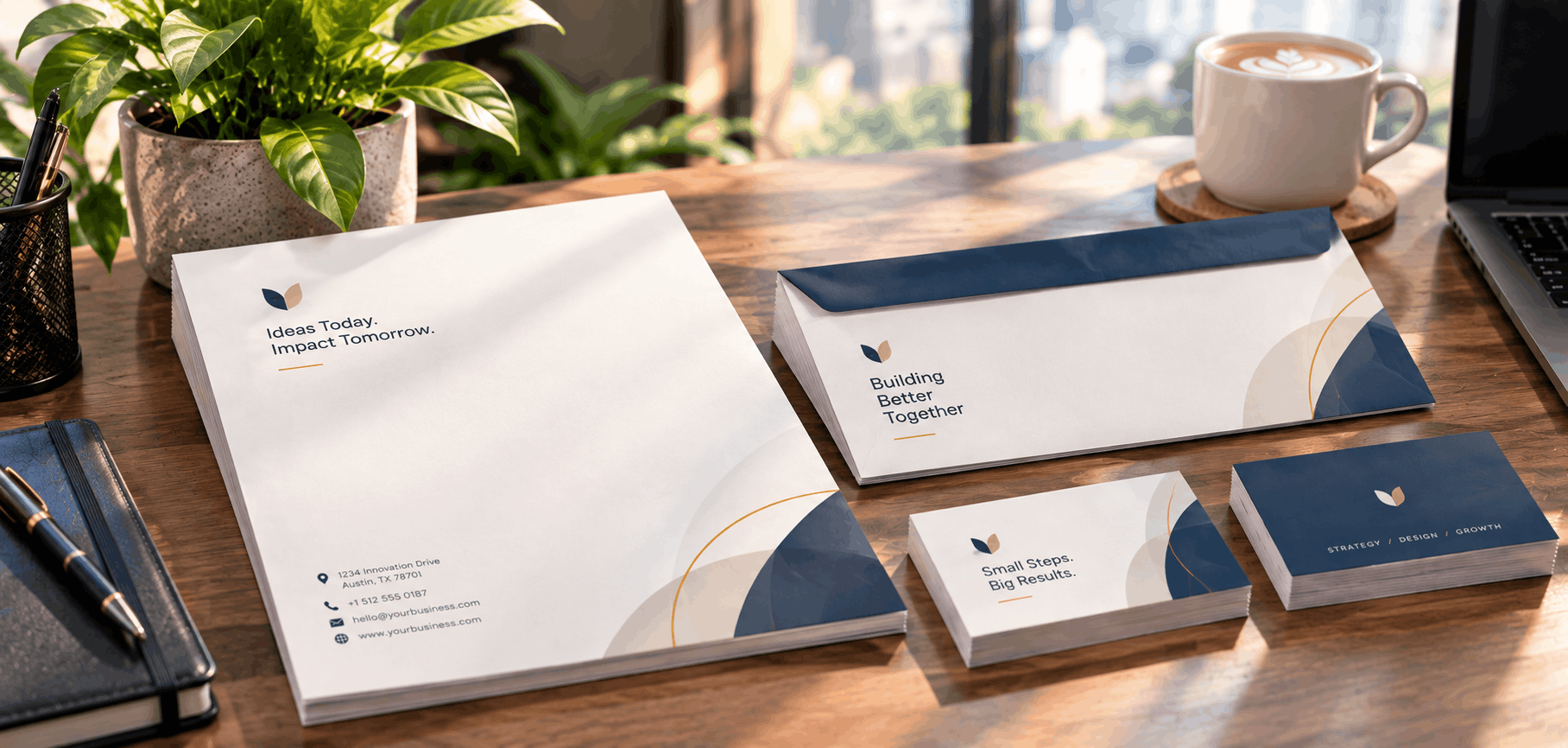
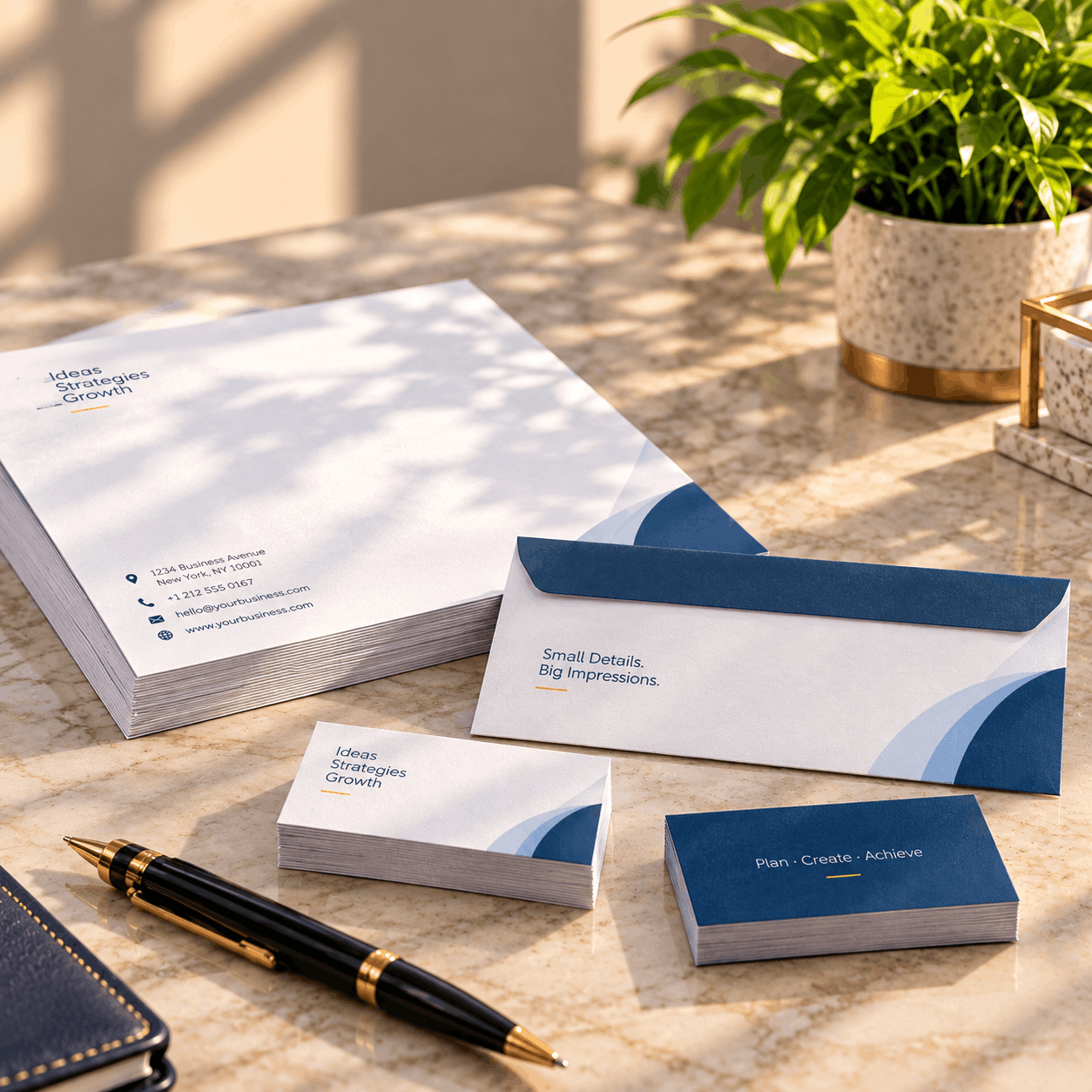
Custom office stationery matters for consistent business branding and communication because it puts your identity in front of clients on nearly every piece of paper that leaves your office, from a signed proposal to a simple thank you note. When a company relies on plain, unbranded paper for its letters and correspondence, it misses dozens of small opportunities to reinforce who they are. Custom office stationery closes that gap by turning routine paperwork into another consistent brand touchpoint.
This is not just about appearances. Clients form impressions based on the smallest details, and a mismatched or generic set of business documents can quietly undercut an otherwise strong brand. A cohesive stationery system, built around a well-printed letterhead, tells a client that the same care applied to your product or service was applied to how you communicate with them.
Office stationery has expanded well beyond a printed letterhead sitting in a drawer. For most businesses, it now includes several coordinated pieces used across daily operations.
Treating these as one connected system, rather than separate purchases made at different times, is what actually produces a polished brand impression.
Trust is built gradually, often through details a client never consciously points out but still absorbs. Stationery is one of those details.
A letter printed on a thin, generic sheet reads differently than the same letter on a substantial, bright white stock with a clean header. Financial firms, legal practices, and healthcare providers in particular depend on this kind of quiet credibility, since their clients are often making decisions based on documents they receive by mail or in person. Inconsistent paper weight or mismatched colors across a proposal, an invoice, and a follow-up letter can raise doubts that have nothing to do with the actual content of those documents.
Not all letterhead paper produces the same result, and the difference becomes obvious the moment a client picks up the page.
Premium opaque stock is thicker and brighter than standard 20lb bond paper, and its high opacity prevents text and images from showing through to the reverse side, which matters for double-sided letters or dense paragraphs. Businesses that want a traditional, textured look often choose linen letterheads instead, while those after a modern, smooth finish tend to prefer the premium opaque option. Either way, moving away from standard office bond paper is one of the simplest upgrades a business can make to its everyday correspondence.
A strong letterhead sets the tone, but it works best as part of a coordinated set rather than a standalone item.
Pairing your letterhead with matching business stationery and branded envelopes ensures that a client sees the same colors, fonts, and logo placement whether they are opening a mailed letter, holding a business card, or reading a proposal. This kind of consistency is especially noticeable to repeat clients, who interact with several of these materials over the course of a relationship rather than just one.
Some businesses see a more immediate return on custom stationery than others, largely based on how often clients handle their printed materials.
Even businesses that invest in custom stationery sometimes limit its impact through a few avoidable choices.
Ordering a coordinated stationery set is straightforward once you know what to confirm before submitting artwork.
A business is judged as much by the paper it hands a client as by the words printed on it, and custom office stationery is one of the most consistent ways to reinforce that impression. Copies America produces premium opaque letterheads alongside matching business cards, envelopes, and notepads, so every piece of correspondence your team sends reflects the same brand standard. Copies America can also help coordinate paper stock and color across a full stationery suite if you are starting from scratch or updating an outdated set. Contact Us for custom stationery printing to review paper options and get a quote for your next order.
Custom office stationery typically includes letterheads, matching envelopes, business cards, and notepads printed with consistent branding, colors, and logo placement. Together these pieces form a coordinated set used across a company's daily correspondence and client-facing communication.
Standard printer paper is thin and has lower opacity, which can allow text to show through and gives correspondence a less polished feel. Premium letterhead stock is thicker, brighter, and higher opacity, giving client-facing letters a more substantial, professional presentation.
Yes. A print provider can match your existing logo, brand colors, and fonts across letterheads, business cards, and envelopes using CMYK or PMS color specifications. Providing your brand guidelines or existing materials helps ensure accurate color matching across every piece.
Premium opaque paper offers a smooth, bright white finish that suits contemporary brands, while linen paper has a traditional textured surface often preferred by legal and financial firms. Neither is universally better, since the right choice depends on whether a business wants a modern or classic presentation.
Most letterhead and stationery orders ship within 3 to 5 business days after artwork approval, with rush production available for time-sensitive needs. Turnaround can vary slightly depending on quantity and whether a color proof is requested before printing.
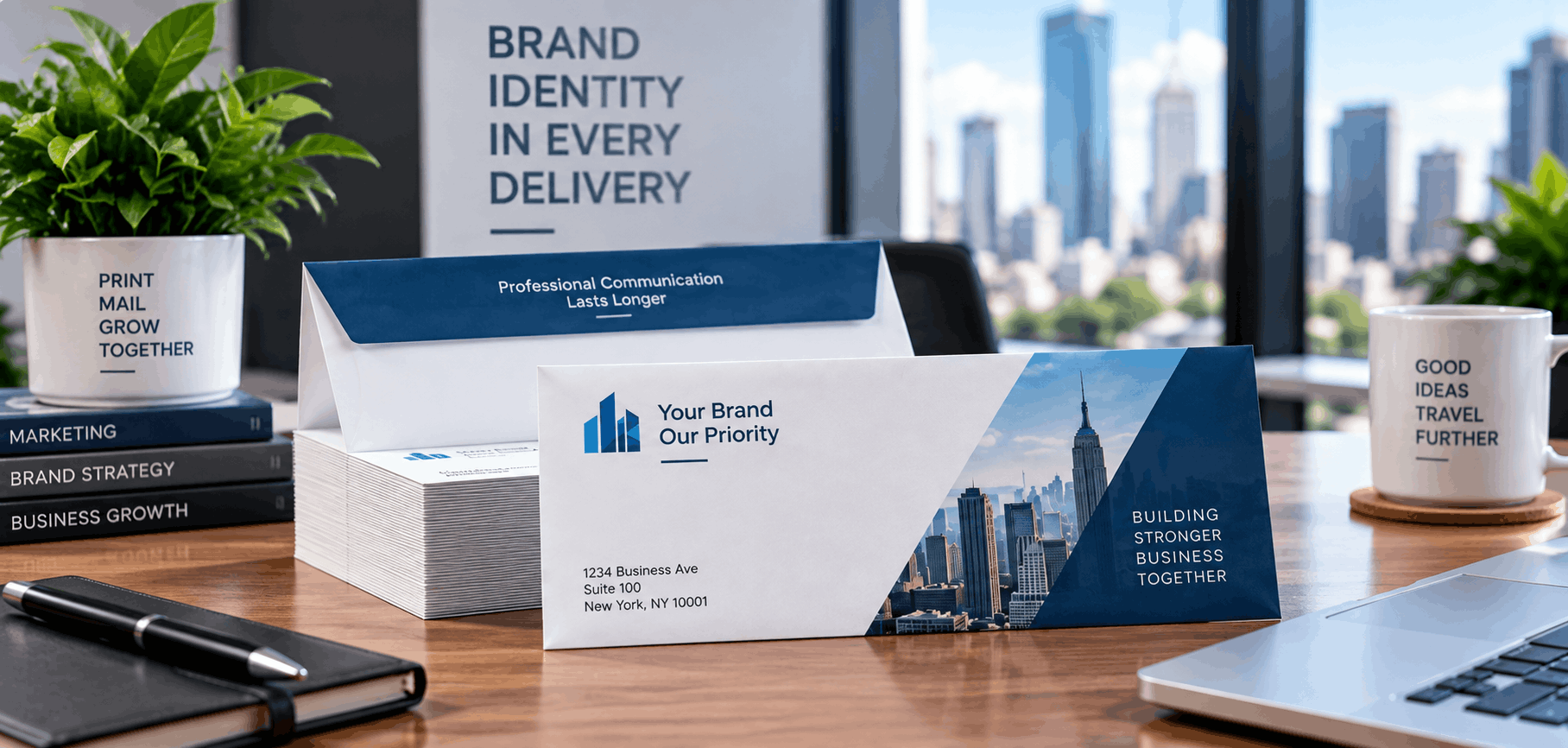
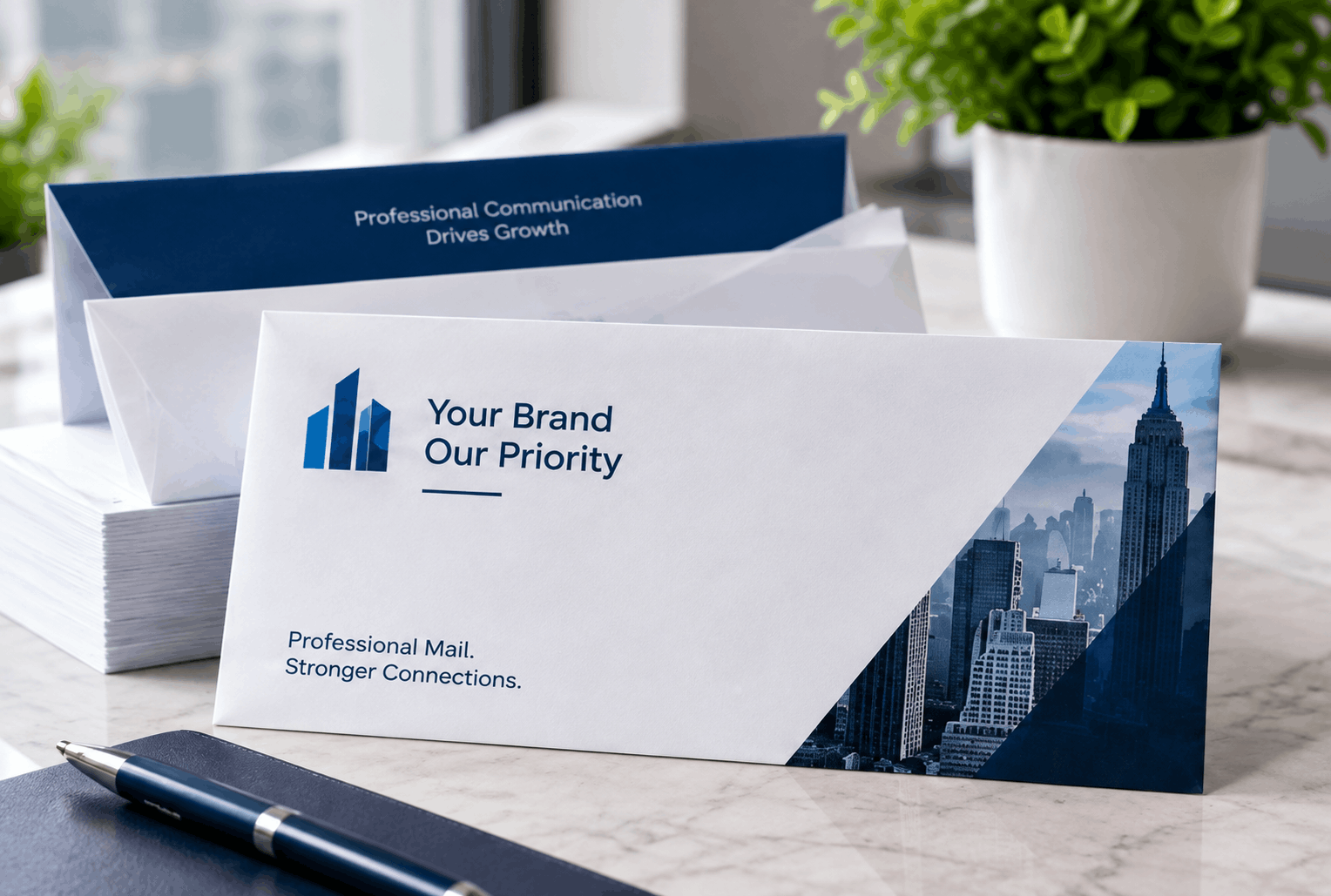
Business mailing envelopes strengthen brand identity and professional communication because they are often the very first physical touchpoint a client or prospect has with your company, long before they open what is inside. A plain white envelope gets sorted into the same pile as every other piece of mail, while business mailing envelopes printed with your logo, colors, and design signal that a real, established company is on the other end. By the time the flap is opened, the recipient has already formed an opinion about who sent it.
This matters more now than it did a decade ago. Inboxes are crowded and digital ads are easy to scroll past, but a well-designed envelope still has to be physically handled before it can be ignored or opened. Companies that invest in branded mailing envelopes are using one of the few remaining moments where a recipient's full attention is guaranteed, even if only for a second or two.
Most businesses spend significant time perfecting the letter, invoice, or offer inside an envelope, then send it out in generic packaging. That gap matters because the envelope is opened, or ignored, before any of that content is ever seen.
Choosing the right print method affects both the final look of your envelope and the overall cost of the campaign.
Offset printing uses CMYK process color to reproduce logos, brand patterns, and photography with sharper detail and more accurate PMS color matching than short-run digital methods. This makes it the standard choice for corporate mailings, fundraising appeals, and any campaign where consistent brand color across thousands of pieces is non-negotiable. Digital printing, on the other hand, is better suited to smaller runs or projects that need a faster turnaround without the higher setup cost of an offset run. For high-volume direct mail envelope printing, offset remains the more economical and color-accurate option per piece.
Custom printed envelopes are not limited to marketing mailers. They play a role anywhere your company sends physical mail that reflects on the brand.
Businesses running larger outreach campaigns often pair branded envelopes with direct mail services to manage design, printing, and distribution as one coordinated effort.
A logo alone is not enough to make a mailing envelope feel like part of a cohesive brand. The details below tend to separate an envelope that reads as branded from one that just has a logo stamped on it.
Matching your envelope design with branded letterheads reinforces the same visual identity from the outside of the mail piece to the document inside it.
Envelopes rarely travel alone. They are usually paired with a letter, invoice, or promotional insert, which means visual consistency across the entire mail piece matters as much as the envelope itself.
Coordinating your envelope printing with the rest of your business stationery, including letterheads and business cards, ensures that every piece a client receives reflects the same brand standards. This consistency is especially important for professional services firms, financial institutions, and healthcare practices, where every printed touchpoint contributes to perceived credibility.
Getting a clean, professional result depends on a few decisions made before the design process even begins.
Working through these steps in order catches the issue that causes the most reprints: artwork that lines up perfectly on a screen but shifts out of place once the envelope is folded and sealed.
Most marketing budgets go toward what is written inside a mailer, while the envelope carrying it gets an afterthought. Copies America takes the opposite approach, producing full color, offset-printed envelopes built for corporate mailings, event invitations, and fundraising campaigns that need consistent, accurate brand color at scale. Whether you are refreshing your entire stationery suite or printing a single campaign, Copies America can walk you through size, stock, and turnaround options that fit your timeline. Contact Us for custom envelope printing to get a template started and a quote for your next mailing.
Business mailing envelopes are custom-printed envelopes used for corporate correspondence, direct mail campaigns, invitations, and client communication. They typically feature a company's logo, brand colors, and design elements printed directly on the envelope face to reinforce brand identity before the recipient opens the mail.
Offset printing is generally the better choice for large runs that require precise, consistent brand color across thousands of pieces. Digital printing works well for smaller batches or projects with a tighter turnaround, since it avoids the higher setup cost associated with offset production.
Yes. A full color, branded envelope stands out against plain white mail and signals legitimacy, which can meaningfully increase the likelihood that a recipient opens it rather than setting it aside. This effect is especially noticeable in donor appeals and marketing campaigns competing for attention.
Standard sizes including #10, #9, 6x9, and 9x12 envelopes are USPS mailable as long as the design leaves the required clearance zones open, particularly the bottom area used for postal barcode scanning. Requesting a template before designing helps ensure your artwork meets these requirements.
Offset-printed envelopes typically ship within 5 to 7 business days after artwork approval, with rush production available for time-sensitive campaigns. Turnaround can vary based on quantity, coating, and whether a proof is requested before the order goes to press.
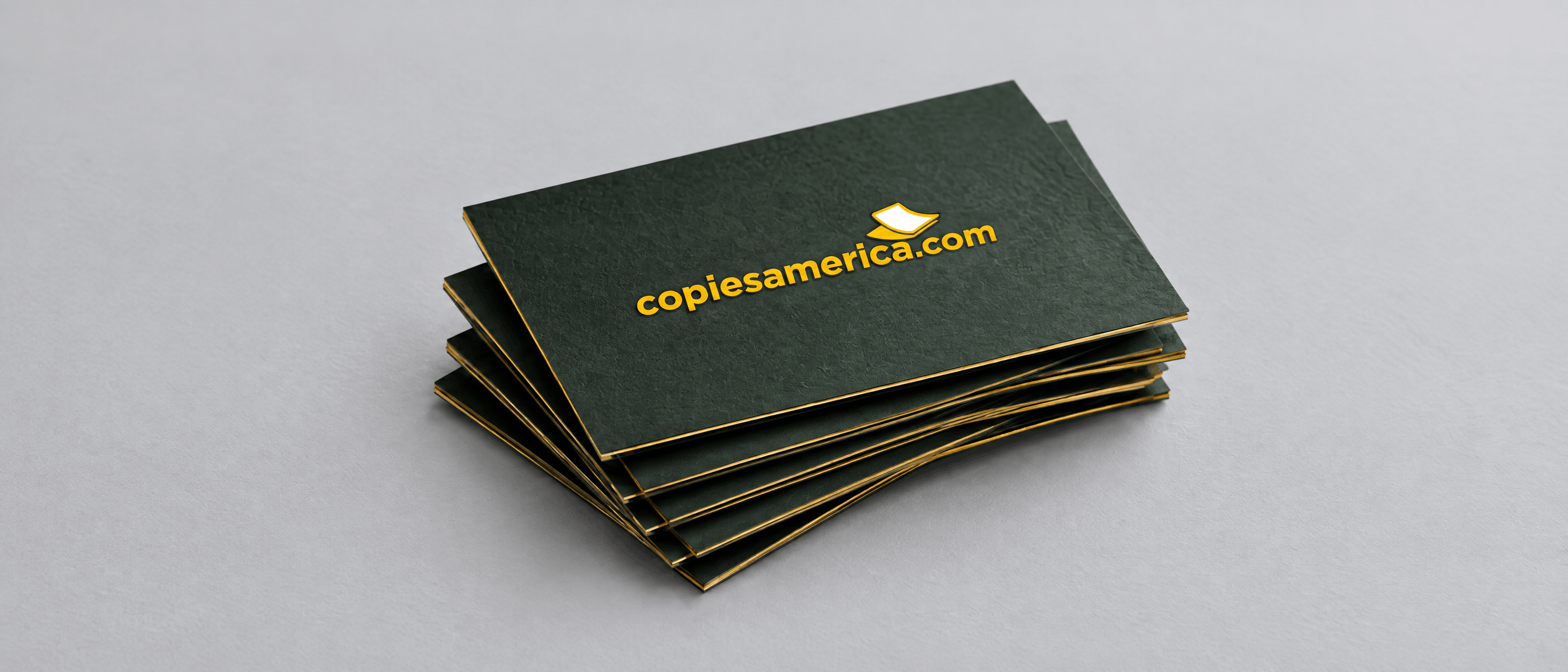
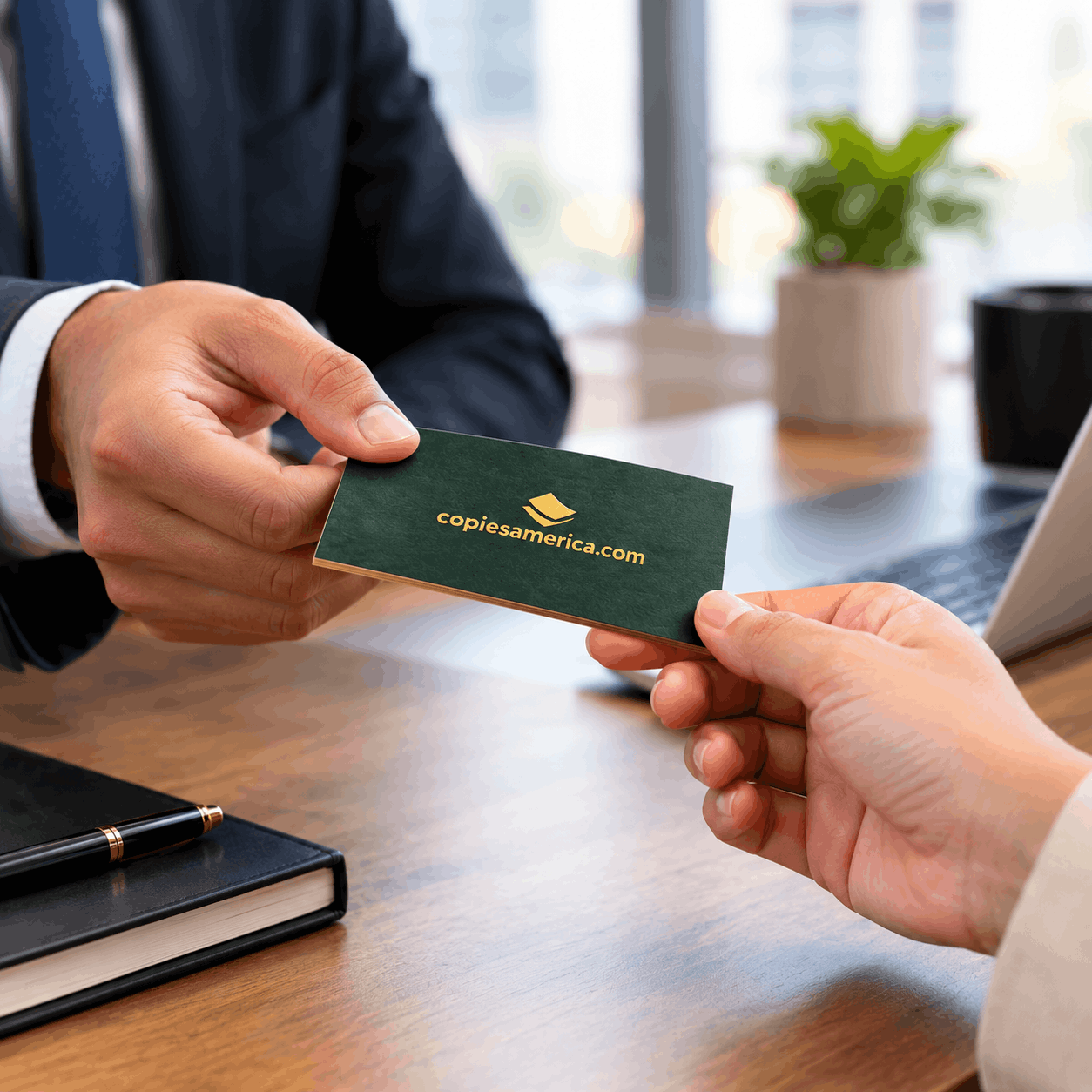
Thick business cards are becoming a popular choice for professional branding in 2026 because their weight, texture, and durability create a stronger first impression than standard cardstock ever could. Business owners are moving away from thin, forgettable cards and toward thick business cards that feel substantial the moment someone picks one up. This shift matters because a business card is often the only physical touchpoint a prospect keeps after a meeting, and a flimsy card rarely earns a second look.
As competition for attention grows across every industry, professionals are realizing that print quality still shapes how a brand is perceived. A card that feels premium in the hand signals that the business behind it takes quality seriously. That is why more architects, consultants, real estate agents, and executives are upgrading their stationery instead of settling for whatever their local print shop stocks by default.
Cardstock thickness is measured in points (pt), with each point representing roughly one-thousandth of an inch. Standard business cards typically run between 14pt and 16pt, while premium thick cards start at 24pt and go up to 32pt.
At 32pt, a card is often layered rather than printed on a single sheet, which is part of what allows for features like a solid painted color along the edges.
Digital contact sharing has made physical cards less common, which paradoxically makes the ones that are handed out matter more. When a business card is rare, it needs to work harder.
Not every business needs the heaviest cardstock available, but certain industries see a clear return on the investment.
Choosing between a standard card and a thicker option comes down to how the card will be used and who will receive it.
Standard 14pt to 16pt cards are practical for high-volume distribution, trade show tables, or internal team use where cost per unit matters more than tactile impact. Thicker cards, by contrast, are better suited to one-on-one meetings, client pitches, and situations where the recipient is likely to keep the card rather than toss it. Many businesses order both: a standard run for general use and a premium run of thick business cards for leadership or client-facing roles.
Thickness alone creates a strong first impression, but the finishing details are what make a card memorable.
Pairing a thick card with matching business stationery helps a brand stay consistent across letterheads, envelopes, and other client-facing materials.
Thick business cards tend to perform best in settings where the recipient has time to notice the details, rather than environments where cards are collected quickly and rarely revisited.
A business attending a trade show may still hand out standard cards in bulk, then reserve thicker cards for warmer leads and decision makers they meet on the floor.
Getting a premium result depends on more than just picking a heavier paper option.
Businesses that are not confident designing the layout themselves can lean on professional graphic design support to make sure the card's visual weight matches its physical weight.
A business card only gets one chance to represent your brand in someone's hand, and thick business cards are built to make that moment count. Copies America produces these cards on premium layered cardstock with custom edge coloring, so every detail, from thickness to finish, reflects the same level of quality your business delivers to clients. Whether you are refreshing your entire team's business cards or ordering a small premium batch for leadership, Copies America can match the production to your goals. Reach out through Contact Us to talk through paper stock, edge color, and turnaround time for your next order.
A thick business card typically starts at 24pt cardstock and goes up to 32pt, which is more than double the thickness of a standard 14pt card. At 32pt, cards are often layered rather than single-sheet, giving them extra rigidity and a premium feel in hand.
Yes, thick business cards generally cost more per unit than standard cards because they use more material and often include finishing work like edge painting or lamination. Many businesses offset this by ordering smaller batches reserved for client meetings rather than mass distribution.
A painted edge business card is a thick, layered card finished with a solid color painted along all four edges. The color is visible even when cards are stacked, making the card stand out before it is picked up or read.
Thick business cards can be worth it for small businesses in client-facing or competitive industries, such as real estate, design, or consulting, where a memorable first impression drives referrals. For internal use or high-volume handouts, a standard card is often the more practical choice.
Most thick business card orders, including layered and edge-painted options, ship within 3 to 5 business days after artwork approval. Rush production is often available for businesses that need cards sooner for an event or meeting.

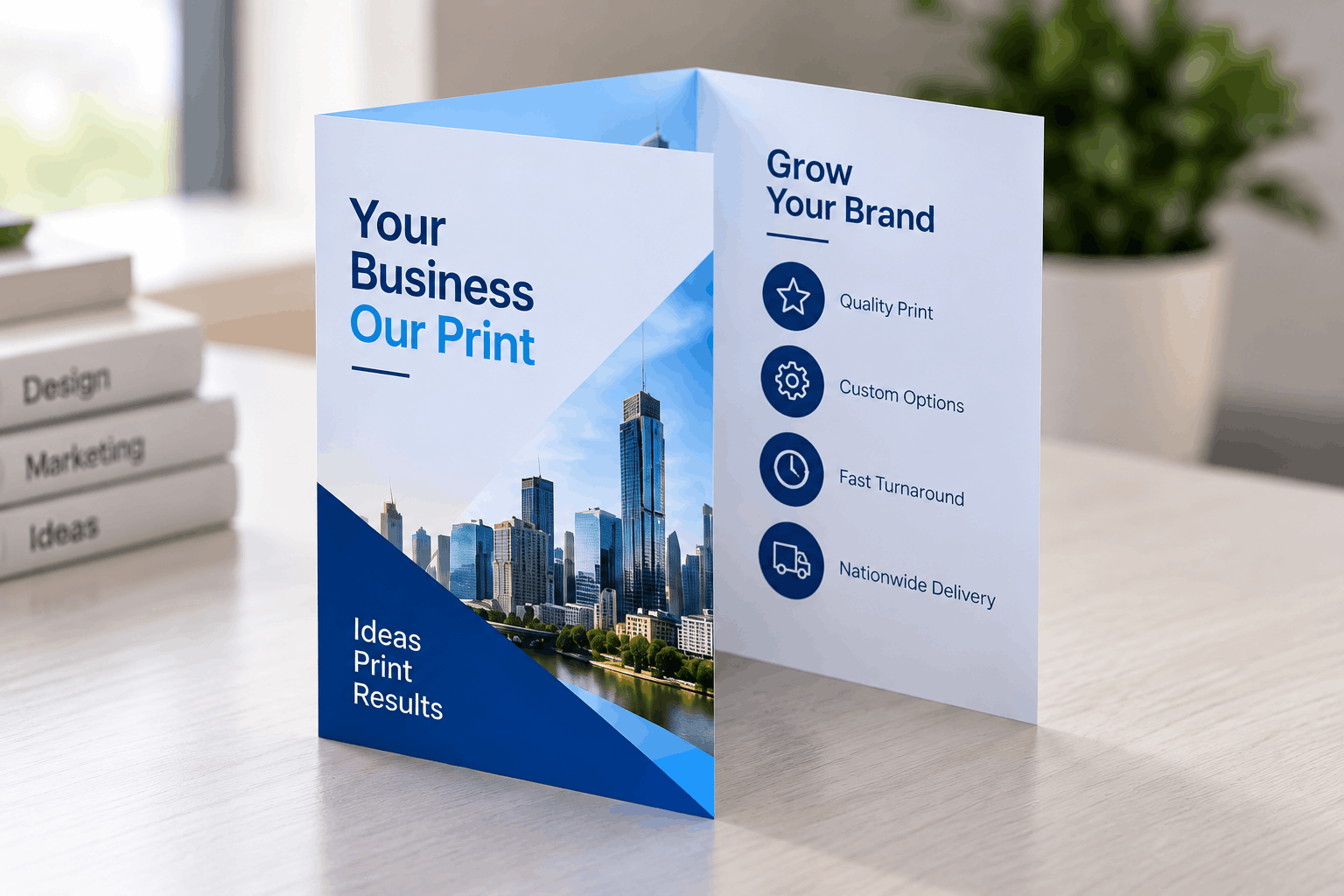
Bi fold brochure printing helps businesses present products more effectively because a single center fold leaves four wide panels instead of the narrower strips other brochure styles produce, so a photo or product shot has genuine room to register instead of getting cropped down to fit. Folding one sheet in half is a simple production step, but the payoff is real estate: a panel that can hold a full product image, a short paragraph, and a bit of breathing room around both. Bi fold brochure printing turns that extra space into a practical advantage for any business trying to sell something visually rather than through a wall of text.
That advantage shows up most for businesses whose offerings depend on being seen rather than read about. A restaurant plating a signature dish, a real estate agent showing a property from multiple angles, or a manufacturer displaying a product line all need panels wide enough for the image to do the convincing. Bi fold brochure printing keeps that visual weight intact without forcing a business into extra folds, smaller panels, or a layout that fights the content it's supposed to showcase.
A bi fold brochure is created from a single flat sheet folded once at the center, producing four equal panels: a front cover, two interior panels, and a back cover.
Because the panels are larger, the format tends to favor content that benefits from visual storytelling over content built around a long list of bullet points.
Certain types of content consistently perform better in a bi fold layout than in a smaller or more segmented brochure:
If your content depends on the reader seeing a clear, well-lit photo rather than skimming a dense paragraph, this is usually the format worth starting with.
Businesses often default to whichever brochure style they have used before without weighing it against the alternative.
Businesses building out a full print marketing kit sometimes pair a bi fold piece with brochures in other formats to cover both a visual overview and a more detailed service breakdown.
The paper stock a business selects changes how a bi fold brochure feels before the reader even opens it.
Matching the paper finish to the tone of the business, polished and premium versus warm and approachable, is often what separates a brochure that feels intentional from one that feels generic.
A larger panel is only an advantage if the layout actually takes advantage of the extra space.
Businesses without an in-house designer often bring in graphic design support to make sure panel layout, image placement, and fold lines are handled correctly before the file goes to press.
File setup errors are one of the most common causes of delayed brochure orders, and most of them are avoidable with a few basic checks.
Businesses ordering brochures alongside other sales materials, such as business cards, often find it more efficient to submit everything as one coordinated order so paper stock and finish stay consistent across pieces.
A brochure only works as hard as the format allows it to. Copies America handles bi fold brochure printing on a range of paper stocks and finishes, with fast turnaround for businesses working toward a launch date, event, or sales push. Whether you already have print-ready artwork or need help planning the layout, the Copies America team can walk through paper, coating, and file setup before anything goes to press. Contact Us to talk through your project and get a quote for your next print run.
Bi fold brochure printing produces a brochure from a single sheet folded once down the center, creating four equal panels: a front cover, two interior panels, and a back cover. The larger panel size compared to other fold styles makes it well suited to photography-heavy or visually driven content.
A bi fold brochure has four larger panels from one center fold, while a tri-fold divides the sheet into three narrower panels. Bi folds work better for large imagery and shorter copy, while tri-folds suit longer, more segmented content like service lists.
Gloss text stock is the most common choice for vibrant color and photography, while matte stock suits a more understated, professional look for services like law or healthcare. Heavier cover-weight stock is available for a more premium, substantial feel.
Standard turnaround typically runs 3 to 5 business days from file approval, with rush production available for tighter deadlines. Submitting a complete, print-ready file with correct bleed and resolution on the first try is the most reliable way to stay on schedule.
Restaurants, real estate agencies, event organizers, and product-focused businesses are among the most common users of the bi fold format. Any business whose message depends on strong photography or a cleaner, more open layout tends to benefit from the larger panel size.
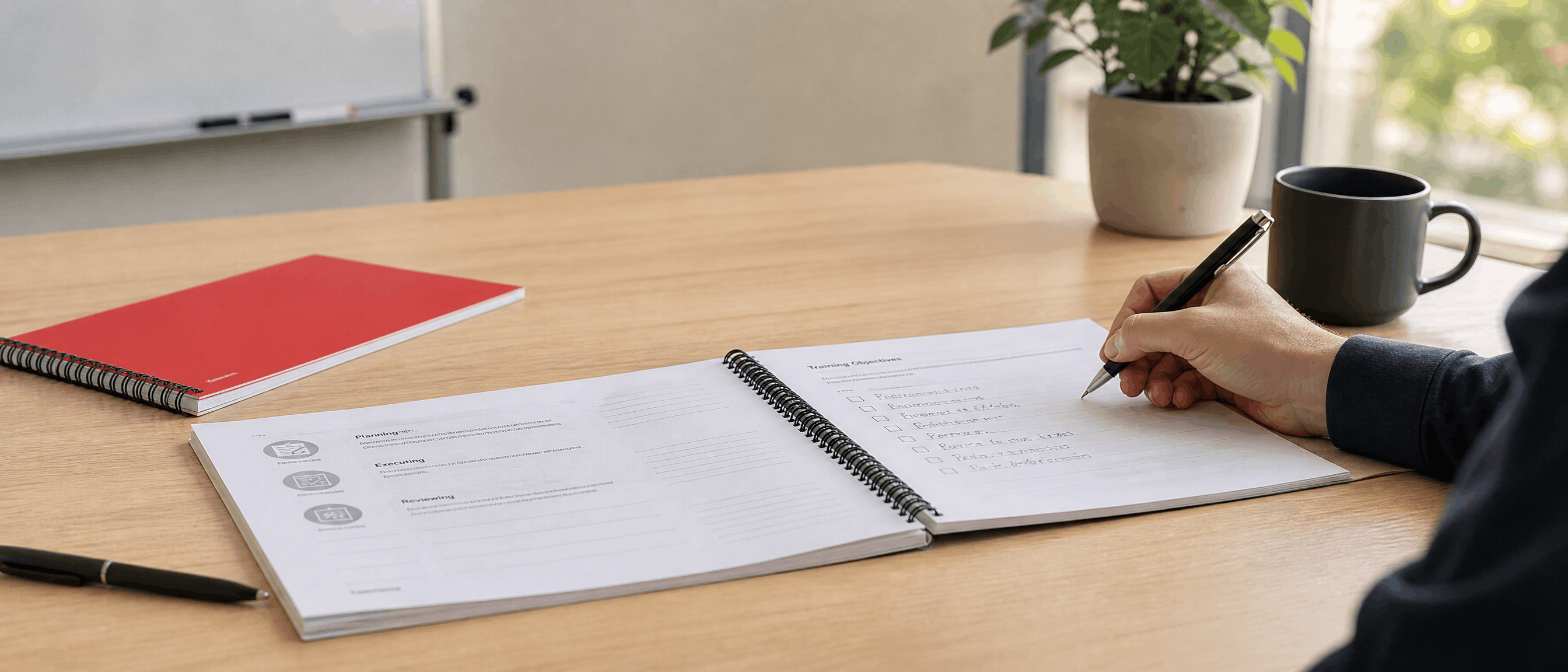
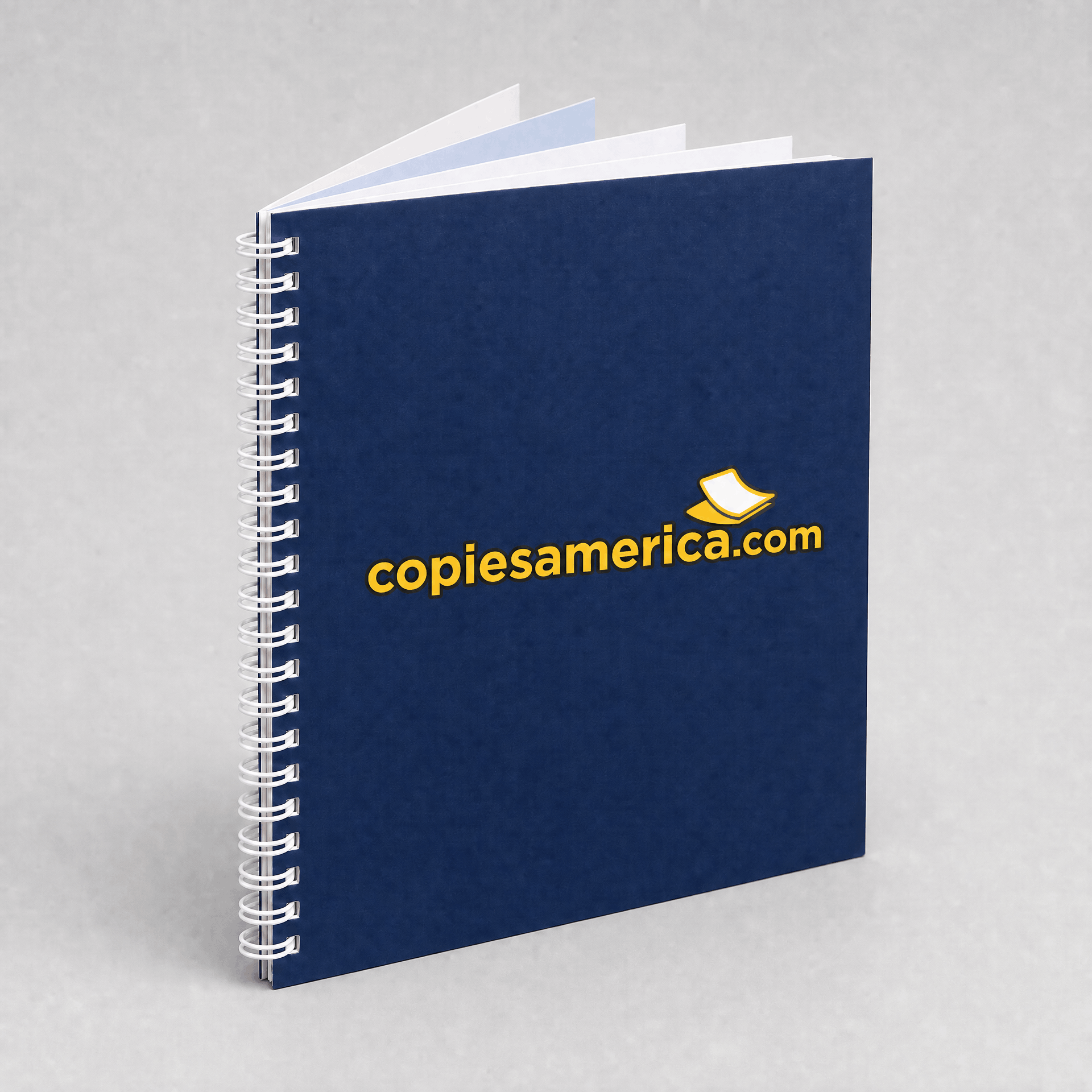
Spiral bound booklet printing is the right choice for your business when your document needs to lay completely flat while someone is actively writing in it, flipping through it at a desk, or referencing it hands-free during daily use. Training manuals, workbooks, and reference guides all share this same practical requirement, and spiral bound booklet printing is built specifically to meet it, using a coil threaded through punched holes so any page opens flat without cracking a spine or fighting to stay open.
Picking a binding style is not just a cosmetic decision. It affects how a document performs in the hands of the person actually using it, whether that is an employee working through a training packet, a customer flipping through a cookbook, or a technician referencing a field manual on the job. Choosing spiral binding for the wrong project can leave you with a booklet that looks fine on a shelf but frustrates the person trying to use it, which is why understanding when this format actually earns its place matters before placing an order.
Spiral binding, sometimes called coil binding, works by punching a row of holes along one edge of the stacked pages and threading a continuous plastic or metal coil through them.
This mechanical simplicity is exactly why the format holds up so well for documents that get handled, written in, and referenced repeatedly rather than displayed. It's also the main reason spiral bound booklet printing remains the default recommendation for anything meant to stay open and usable on a desk or counter.
Not every project needs a booklet that lays flat and folds back on itself, but plenty of common business documents genuinely do:
If your document falls into any of these categories, a flat-opening, durable spine tends to matter more than a printed spine label or shelf presentation.
Businesses often default to whatever binding they have used before, without weighing it against the alternatives.
The right answer depends less on which binding looks most impressive and more on how the finished piece will actually be used once it leaves your printer.
A well-chosen cover changes how a spiral bound piece feels in someone's hands, even though the binding style itself stays functional rather than decorative.
These choices are small individually, but together they determine whether a spiral bound piece reads as professional or purely functional.
File setup for spiral binding has a few requirements that differ from other booklet formats, and getting them wrong is one of the most common causes of production delays.
Businesses producing higher volumes often route these jobs through digital printing for shorter runs or faster turnaround, while larger print quantities may be more cost-effective through traditional offset printing instead.
Booklet projects rarely happen once. Most businesses reorder training materials, workbooks, or reference guides on a recurring basis, so planning ahead saves time later.
Treating booklet printing as a recurring need rather than a one-time purchase tends to make future orders simpler and more predictable.
Choosing the right binding is the difference between a booklet that gets used every day and one that ends up shoved in a drawer. Copies America produces spiral bound booklet printing alongside wire-o, perfect, and saddle-stitch options under one roof, with cover stock, coil color, and page count options built around how your document will actually be used. Whether you are printing your first training manual or reordering a workbook your team relies on, the Copies America production team can walk you through binding, cover, and file setup before anything goes to press. Contact Us to get a quote and a template suited to your project.
Spiral bound booklet printing works best for documents that need to lay completely flat while in use, such as training manuals, workbooks, and reference guides. The coil binding allows a 360-degree fold, so the piece stays open on a desk or counter without being held or weighted down.
Spiral binding has no fixed page limit, which sets it apart from saddle-stitch binding that tops out around 64 pages. Because the coil accommodates any thickness of punched pages, spiral binding works equally well for a short workbook or a lengthy field manual.
Yes, individual pages can be threaded onto or removed from the coil after binding, which is not possible with glued or stapled formats. This makes spiral binding a practical choice for reference documents or price lists that are updated periodically.
Spiral binding is functional but not typically the most polished option for client-facing materials, since the coil is visible and there is no printable spine. Wire-O binding offers a similar flat-opening functionality with a cleaner, more symmetrical appearance better suited to proposals and portfolios.
Files for spiral binding need a clear margin of at least three-eighths of an inch along the edge where holes will be punched. Text, logos, and images should stay outside that zone to avoid being clipped or obscured once the coil is threaded through the pages.
Get insider tips about printing, design, marketing and more on your favorite social network.




Enter your registered email address to reset your password. An email will be sent to your registered email address with a password reset link
If you don’t remember your email address please give us a call during normal business hours 9:00 am – 7:00 pm EST at 1-800-423-2679 or leave a voice mail and we will return your call next business day.
Don’t have an account?
Create a new account


.png)