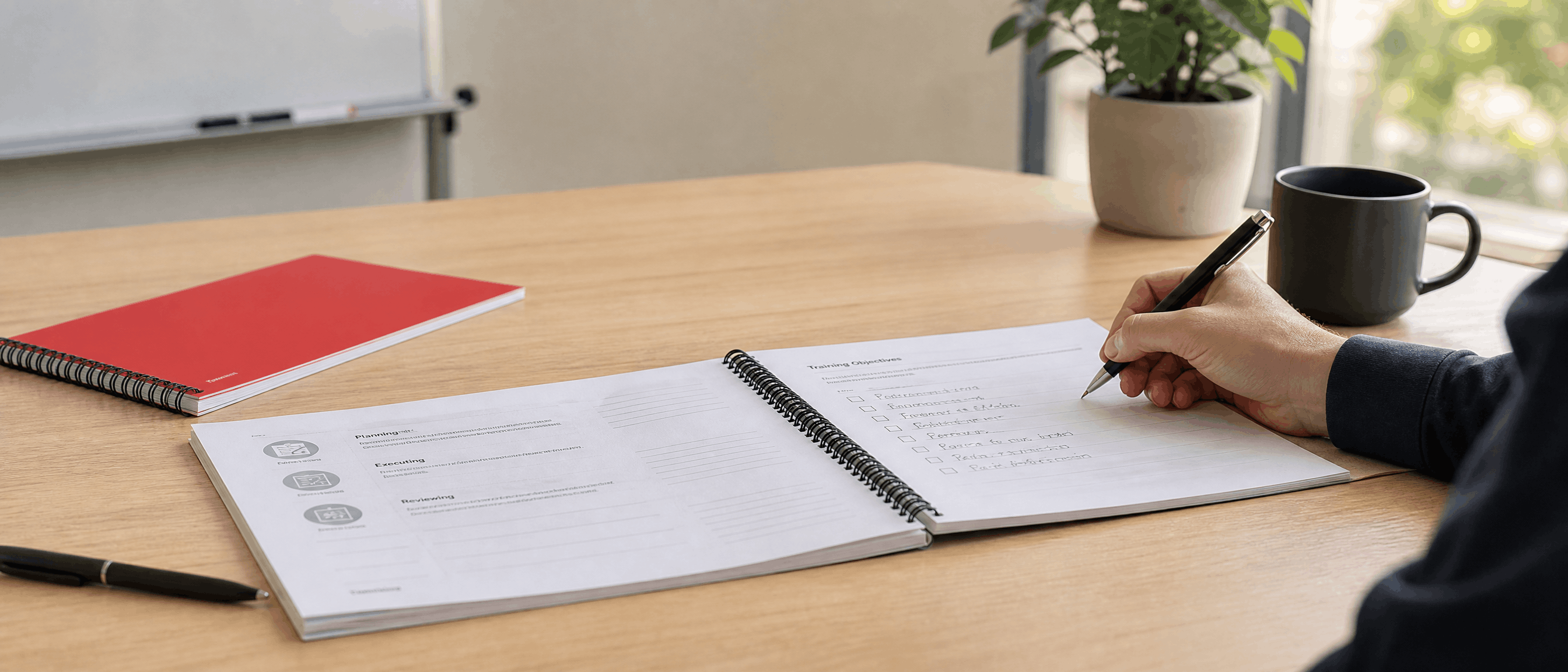
Spiral bound booklet printing is the right choice for your business when your document needs to lay completely flat while someone is actively writing in it, flipping through it at a desk, or referencing it hands-free during daily use. Training manuals, workbooks, and reference guides all share this same practical requirement, and spiral bound booklet printing is built specifically to meet it, using a coil threaded through punched holes so any page opens flat without cracking a spine or fighting to stay open.
Picking a binding style is not just a cosmetic decision. It affects how a document performs in the hands of the person actually using it, whether that is an employee working through a training packet, a customer flipping through a cookbook, or a technician referencing a field manual on the job. Choosing spiral binding for the wrong project can leave you with a booklet that looks fine on a shelf but frustrates the person trying to use it, which is why understanding when this format actually earns its place matters before placing an order.
Spiral binding, sometimes called coil binding, works by punching a row of holes along one edge of the stacked pages and threading a continuous plastic or metal coil through them.
This mechanical simplicity is exactly why the format holds up so well for documents that get handled, written in, and referenced repeatedly rather than displayed. It's also the main reason spiral bound booklet printing remains the default recommendation for anything meant to stay open and usable on a desk or counter.
Not every project needs a booklet that lays flat and folds back on itself, but plenty of common business documents genuinely do:
If your document falls into any of these categories, a flat-opening, durable spine tends to matter more than a printed spine label or shelf presentation.
Businesses often default to whatever binding they have used before, without weighing it against the alternatives.
The right answer depends less on which binding looks most impressive and more on how the finished piece will actually be used once it leaves your printer.
A well-chosen cover changes how a spiral bound piece feels in someone's hands, even though the binding style itself stays functional rather than decorative.
These choices are small individually, but together they determine whether a spiral bound piece reads as professional or purely functional.
File setup for spiral binding has a few requirements that differ from other booklet formats, and getting them wrong is one of the most common causes of production delays.
Businesses producing higher volumes often route these jobs through digital printing for shorter runs or faster turnaround, while larger print quantities may be more cost-effective through traditional offset printing instead.
Booklet projects rarely happen once. Most businesses reorder training materials, workbooks, or reference guides on a recurring basis, so planning ahead saves time later.
Treating booklet printing as a recurring need rather than a one-time purchase tends to make future orders simpler and more predictable.
Choosing the right binding is the difference between a booklet that gets used every day and one that ends up shoved in a drawer. Copies America produces spiral bound booklet printing alongside wire-o, perfect, and saddle-stitch options under one roof, with cover stock, coil color, and page count options built around how your document will actually be used. Whether you are printing your first training manual or reordering a workbook your team relies on, the Copies America production team can walk you through binding, cover, and file setup before anything goes to press. Contact Us to get a quote and a template suited to your project.
Spiral bound booklet printing works best for documents that need to lay completely flat while in use, such as training manuals, workbooks, and reference guides. The coil binding allows a 360-degree fold, so the piece stays open on a desk or counter without being held or weighted down.
Spiral binding has no fixed page limit, which sets it apart from saddle-stitch binding that tops out around 64 pages. Because the coil accommodates any thickness of punched pages, spiral binding works equally well for a short workbook or a lengthy field manual.
Yes, individual pages can be threaded onto or removed from the coil after binding, which is not possible with glued or stapled formats. This makes spiral binding a practical choice for reference documents or price lists that are updated periodically.
Spiral binding is functional but not typically the most polished option for client-facing materials, since the coil is visible and there is no printable spine. Wire-O binding offers a similar flat-opening functionality with a cleaner, more symmetrical appearance better suited to proposals and portfolios.
Files for spiral binding need a clear margin of at least three-eighths of an inch along the edge where holes will be punched. Text, logos, and images should stay outside that zone to avoid being clipped or obscured once the coil is threaded through the pages.
Get insider tips about printing, design, marketing and more on your favorite social network.




Enter your registered email address to reset your password. An email will be sent to your registered email address with a password reset link
If you don’t remember your email address please give us a call during normal business hours 9:00 am – 7:00 pm EST at 1-800-423-2679 or leave a voice mail and we will return your call next business day.
Don’t have an account?
Create a new account