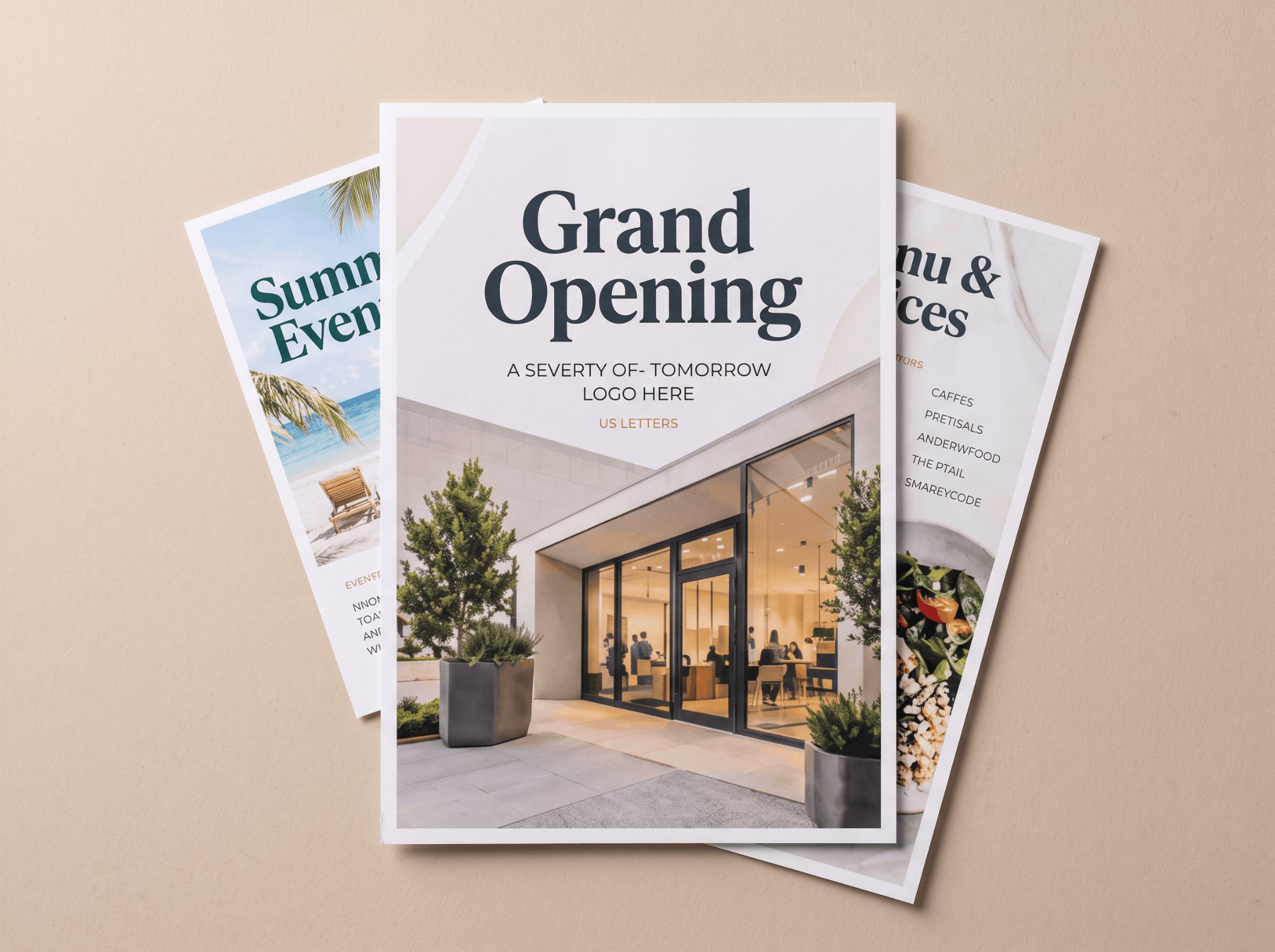
The standard flyer size for most marketing campaigns is 8.5 x 11 inches, the same as U.S. letter paper. It is familiar, affordable in volume, and fits most displays and folders without trimming. Still, the best standard flyer size depends on where the flyer will go, how many people need to see it, and how much content must fit. Size changes cost per piece and decides which distribution methods are practical, which is why business flyer printing services usually start the conversation with size.
Flyer printing falls into a few recognized sizes. Each suits a different job, and no single one is correct for every campaign.
Most U.S. printers treat 8.5 x 11 as the default unless a project needs more or less room. Many businesses pair flyers with brochures, using the flyer for the broad announcement and the brochure for the deeper pitch to qualified prospects.
How a flyer reaches its audience should shape the size as much as the content does.
Flyers handed out at a register or left at homes pair well with door hangers, which give residential campaigns a second, more durable touchpoint. Choosing the channel first avoids a batch of flyers that does not fit how you plan to use them.
A full sheet gives more room for content, while a half sheet costs less per piece at scale. These two sizes cover most flyer orders.
Neither size is better by default. The deciding question is whether the flyer must be read from a distance or held in someone's hand.
Size is not the only variable. Paper stock and color choices change both cost and durability at every size.
Short and mid-size runs suit digital printing, which allows quick turnaround for time-sensitive promotions and easy updates between runs.
Every size has its own file requirements, and errors here are a leading cause of reprints.
A graphic design team familiar with these specs can make sure a layout built for one size translates cleanly if the campaign later shifts to another format.
Size and quantity are closely linked, since per-piece cost changes with both.
Mailed campaigns should coordinate flyer size with direct mail services to confirm postage and envelope fit before printing. Treating size and quantity as one planning decision usually produces a more accurate budget.
Choosing the right size is the first real decision in any flyer campaign, and it shapes cost, distribution, and results. Copies America prints flyers in half-sheet, letter, legal, and tabloid sizes, with full color or black and white options and fast turnaround for time-sensitive promotions. Share your audience, quantity, and timeline, and Copies America will recommend the size, stock, and quantity that fit your budget. Contact Us to request a quote.
The standard flyer size for most marketing campaigns is 8.5 x 11 inches, the same as a U.S. letter sheet. It is widely recognized, fits standard displays and folders without trimming, and stays the default choice unless a campaign calls for a smaller or larger format.
A half-sheet flyer at 5.5 x 8.5 inches is generally the best size for in-person handouts. It is compact, easy to pocket, and costs less per piece because two prints come from one full sheet. It works especially well for door-to-door distribution and event tabling.
Yes, flyers can be mailed, either folded inside an envelope or as a self-mailer. Size and weight determine the USPS postage class, so a half-sheet usually costs less to send than a full sheet. Confirm dimensions with your mailing provider before printing to avoid unexpected postage costs.
A full-sheet 8.5 x 11 or tabloid 11 x 17 flyer works best for bulletin boards and storefront windows. Both are designed to be read from a short distance rather than held in hand, and the larger 11 x 17 size makes the strongest visual impact in high-traffic locations.
Flyer files need a 0.125 inch bleed on all sides, with text and logos kept at least 0.125 inch inside the trim edge. Submit files at 300 DPI in CMYK for full color or grayscale for black and white, and outline all fonts before sending them to production.
Get insider tips about printing, design, marketing and more on your favorite social network.




Enter your registered email address to reset your password. An email will be sent to your registered email address with a password reset link
If you don’t remember your email address please give us a call during normal business hours 9:00 am – 7:00 pm EST at 1-800-423-2679 or leave a voice mail and we will return your call next business day.
Don’t have an account?
Create a new account