Thick business cards are becoming a popular choice for professional branding in 2026 because their weight, texture, and durability create a stronger first impression than standard cardstock ever could. Business owners are moving away from thin, forgettable cards and toward thick business cards that feel substantial the moment someone picks one up. This shift matters because a business card is often the only physical touchpoint a prospect keeps after a meeting, and a flimsy card rarely earns a second look.
As competition for attention grows across every industry, professionals are realizing that print quality still shapes how a brand is perceived. A card that feels premium in the hand signals that the business behind it takes quality seriously. That is why more architects, consultants, real estate agents, and executives are upgrading their stationery instead of settling for whatever their local print shop stocks by default.
Cardstock thickness is measured in points (pt), with each point representing roughly one-thousandth of an inch. Standard business cards typically run between 14pt and 16pt, while premium thick cards start at 24pt and go up to 32pt.
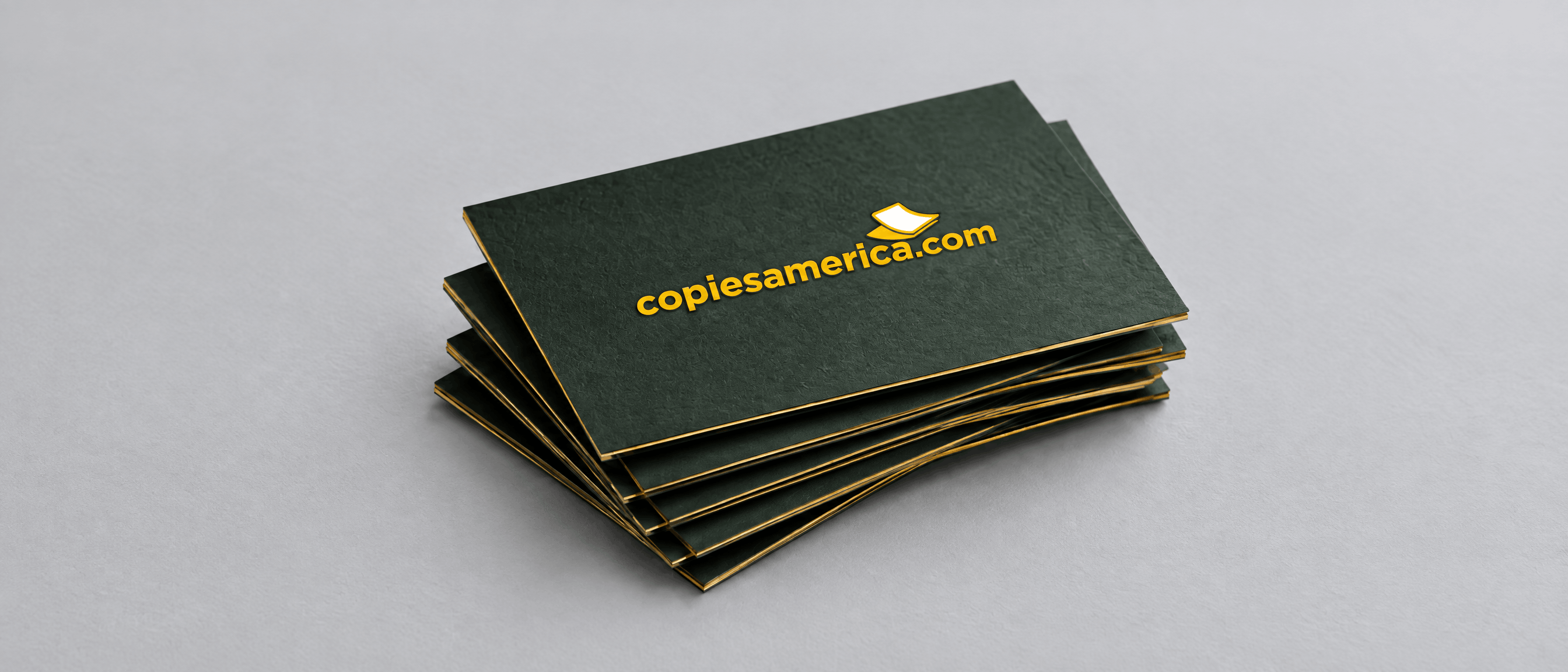
At 32pt, a card is often layered rather than printed on a single sheet, which is part of what allows for features like a solid painted color along the edges.
Digital contact sharing has made physical cards less common, which paradoxically makes the ones that are handed out matter more. When a business card is rare, it needs to work harder.
Not every business needs the heaviest cardstock available, but certain industries see a clear return on the investment.
Choosing between a standard card and a thicker option comes down to how the card will be used and who will receive it.
Standard 14pt to 16pt cards are practical for high-volume distribution, trade show tables, or internal team use where cost per unit matters more than tactile impact. Thicker cards, by contrast, are better suited to one-on-one meetings, client pitches, and situations where the recipient is likely to keep the card rather than toss it. Many businesses order both: a standard run for general use and a premium run of thick business cards for leadership or client-facing roles.
Thickness alone creates a strong first impression, but the finishing details are what make a card memorable.
Pairing a thick card with matching business stationery helps a brand stay consistent across letterheads, envelopes, and other client-facing materials.
Thick business cards tend to perform best in settings where the recipient has time to notice the details, rather than environments where cards are collected quickly and rarely revisited.
A business attending a trade show may still hand out standard cards in bulk, then reserve thicker cards for warmer leads and decision makers they meet on the floor.
Getting a premium result depends on more than just picking a heavier paper option.
Businesses that are not confident designing the layout themselves can lean on professional graphic design support to make sure the card's visual weight matches its physical weight.
A business card only gets one chance to represent your brand in someone's hand, and thick business cards are built to make that moment count. Copies America produces these cards on premium layered cardstock with custom edge coloring, so every detail, from thickness to finish, reflects the same level of quality your business delivers to clients. Whether you are refreshing your entire team's business cards or ordering a small premium batch for leadership, Copies America can match the production to your goals. Reach out through Contact Us to talk through paper stock, edge color, and turnaround time for your next order.
A thick business card typically starts at 24pt cardstock and goes up to 32pt, which is more than double the thickness of a standard 14pt card. At 32pt, cards are often layered rather than single-sheet, giving them extra rigidity and a premium feel in hand.
Yes, thick business cards generally cost more per unit than standard cards because they use more material and often include finishing work like edge painting or lamination. Many businesses offset this by ordering smaller batches reserved for client meetings rather than mass distribution.
A painted edge business card is a thick, layered card finished with a solid color painted along all four edges. The color is visible even when cards are stacked, making the card stand out before it is picked up or read.
Thick business cards can be worth it for small businesses in client-facing or competitive industries, such as real estate, design, or consulting, where a memorable first impression drives referrals. For internal use or high-volume handouts, a standard card is often the more practical choice.
Most thick business card orders, including layered and edge-painted options, ship within 3 to 5 business days after artwork approval. Rush production is often available for businesses that need cards sooner for an event or meeting.
Get insider tips about printing, design, marketing and more on your favorite social network.




Enter your registered email address to reset your password. An email will be sent to your registered email address with a password reset link
If you don’t remember your email address please give us a call during normal business hours 9:00 am – 7:00 pm EST at 1-800-423-2679 or leave a voice mail and we will return your call next business day.
Don’t have an account?
Create a new account